Cooling our neighbourhoods
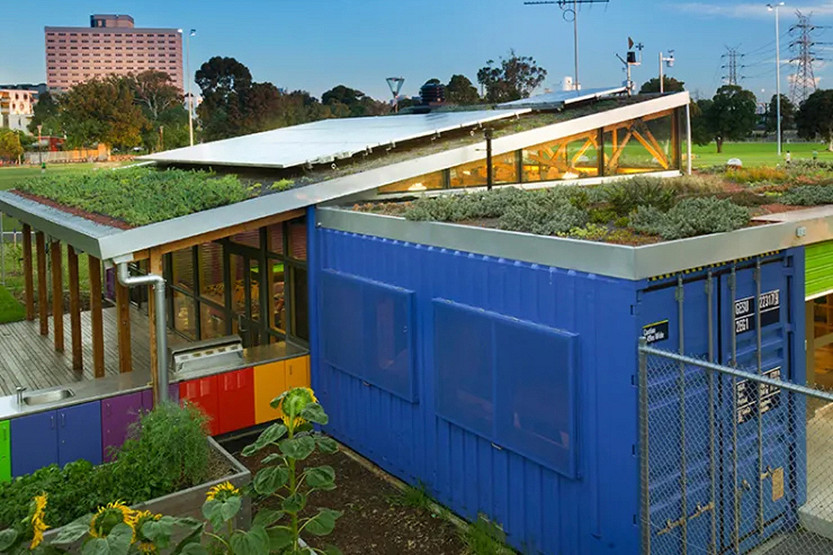

Changes in land cover due to increased urbanisation can affect the urban environment and climate substantially.
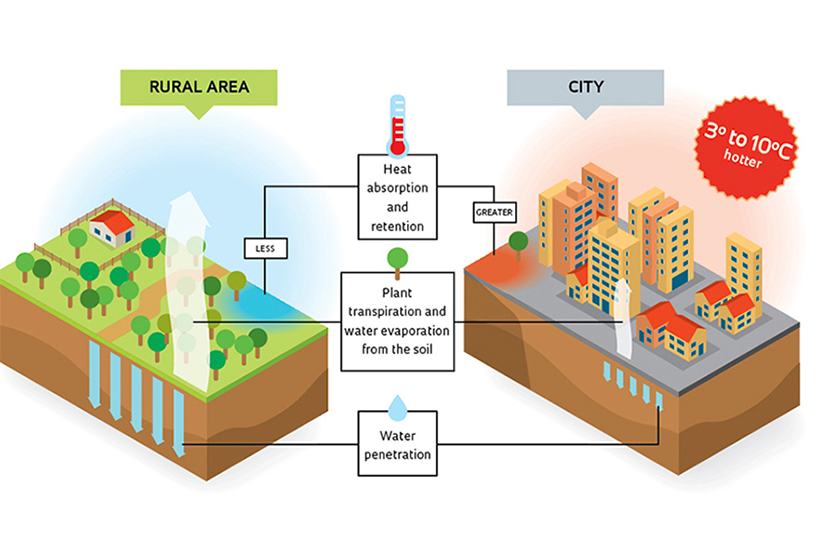
One well-documented effect of urbanisation is the Urban Heat Island (UHI); that is, higher temperatures in urban areas compared with surrounding rural areas.
Inner-city Melbourne experiences increased temperatures of two to four degrees higher than surrounding rural areas, particularly during the night. This temperature difference increases significantly up to 10 degrees during heat waves, and these are becoming more frequent, intense and longer.
Contributing factors to this heat island effect are lack of trees and open spaces, building density, dark non-reflective surfaces (asphalt roads, dark roofs), building materials, building forms and the thermal properties of construction materials,
The UHI can contribute to heat-related illnesses including heart disease, which can lead to mortality, particularly during summer. For example, the deaths of a total of 4555 people were attributed to extreme heat over the period 1900–2011 in Australia, which is 55.2 per cent of the total natural hazard deaths
Melbourne is the fastest growing city in Australia and, according to Plan Melbourne 2050, is expected to expand into the surrounding suburban regions.
According to Monash University the intensity of the UHI effect is not uniform across the city and heavily depends on tree canopy cover and building density. Leafier suburbs typically have more mature tree canopies, which mitigate temperature increases through natural shading and evapotranspiration.
Considered urban planning that incorporates smart growth principles such as cool roofs, cool pavements, multiple transport options, more open and green space is important to mitigate these expected effects from more development.
Individuals can counteract the urban heat island (UHI) effect by encouraging their local council to create more green and open space, put a limit on density of development, reduce roads and create walkable neighbourhoods.
Individuals can take actionable and localised steps around their homes and neighbourhoods by increasing local shade through planting trees and vegetation, replacing dark, heat-absorbing surfaces with reflective “cool” materials, and minimising personal energy consumption during peak heatwaves.
Specifically, upgrading to a “cool roof” by applying solar-reflective coatings or using highly reflective shingles. This reflects sunlight away from your property rather than absorbing, and radiating it back into the atmosphere.
By converting empty rooftop space or bare walls into vegetative gardens significantly lowers roof temperatures and provides natural insulation.
By replacing dark, heat absorbing asphalt and concrete with porous pavers, grass or gravel allows water to absorb into the ground and naturally cool the surface.
The City of Melbourne’s urban forest strategy plans to mitigate the heat island effects by increasing canopy cover from 22 to 40 per cent by 2040.
A question remains, when the tipping point for urban density that it becomes intolerable to live in the cities? •
Related Articles

Are Indigenous decision-making processes required for new technological advances?
Indigenous decision-making processes have historically demonstrated high effectiveness through community-based, consensus-driven, and long-term sustainable approaches that have enabled resilience over thousands of years.
Read More
The good news …
With powerful nations rolling back climate protections, temperatures soaring and extreme weather conditions increasing, eco-anxiety is on the increase.
Read More
Real versus fake Christmas tree. Which one is better for the environment?
If you celebrate Christmas, Christmas trees are an important symbolic feature of this celebration. Traditionally they offered hope during the long harsh winter months and became a family ritual of decorating and spending time together.
Read More
All Things Equal: a café where inclusion comes first
Council pushes for no-truck zones in Kensington as tunnel impacts deepen
 Download the Latest Edition