Hawke St residents question council process after linear park redesign

West Melbourne residents say they are frustrated and disappointed after the City of Melbourne revealed that the long-planned Hawke Street Linear Park will need to be redesigned, pushing construction back by several years.
Council officers told a recent meeting that a high-pressure gas main and other underground services mean the 2023 council-endorsed design is “not viable”.
A detailed feasibility assessment found strict exclusion zones around the gas main prevent tree planting above or near it, significantly limiting canopy cover under the original plan and requiring the removal of several existing large street trees.
Hawke St resident Sue Scarf said the explanation did not stack up, pointing to nearby streets where similar infrastructure had not prevented greening works.
They can do the greening down Roden St, which actually has more infrastructure directly in front of those terrace houses than Hawke St does,” Ms Scarf said. “So why can’t they do exactly the same thing on Hawke St and put the greening in front of our homes to mitigate the traffic impacts?
Ms Scarf said residents had not been shown any draft designs that placed greening along the southern side of Hawke St, closest to the terrace houses.
She also criticised what she described as a lack of transparency in the consultation process.
“Council sat down with Roden St residents and talked through the greening with them,” she said. “That hasn’t happened with Hawke St residents between Spencer St and the park.”
North Melbourne resident and North and West Melbourne Association member Mary Masters said the gas main issue had been raised during community consultation in 2023.
“There was a submission from a local resident asking whether underground services would conflict with the design,” Ms Masters said. “At the time, council said the design took the known position of underground services into account. That’s why it’s concerning that this is now being treated as a major barrier.”
At the November 25 council meeting, the council’s general manager of infrastructure and amenity Rick Kwasek said services were “understood” at the concept stage, but later investigations revealed additional constraints.
“It was found that it was a high-pressure gas main with significantly greater easement requirements, which limited planting above it,” he said.
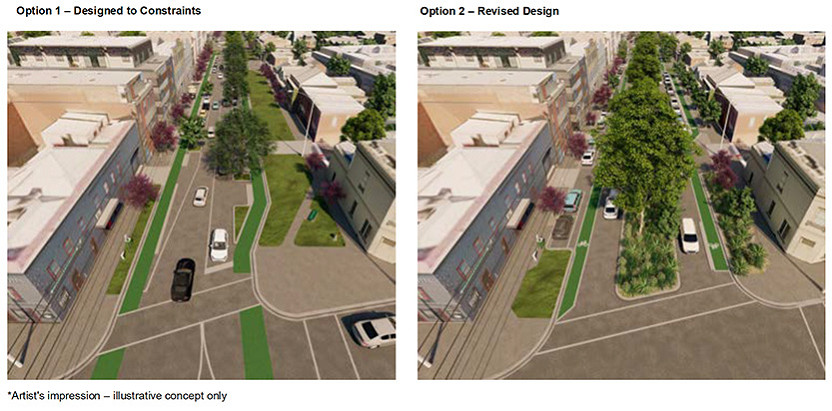
Under a revised “Hawke Street Greening” proposal, most new trees would be relocated to the central median to avoid the gas main and overhead powerlines.
Option 2 would deliver around 130 new trees, 2036 square metres of additional street greening and an expanded Hawke and Curzon Street Reserve of 2208 square metres. On-road bike lanes would be retained and traffic reduced to one lane in each direction.
However, residents say the revised plans would reduce amenity for people living along Hawke St.
“They’re moving traffic closer to our front doors and increasing the amount of tarmac between our homes and the greening,” Ms Scarf said. “They’re also removing the big shade trees in front of the terrace houses.”
She said residents were not seeking elaborate landscaping.
“We just want a buffer between us and the traffic,” she said. “Even grass would be acceptable.”
At the November 2 meeting, Lord Mayor Nick Reece acknowledged the failure to identify the gas main earlier, describing it as “laughable” from an engineering perspective, but said the revised design still had the potential to be an example of inner-city greening.
Despite calls from residents for the project to proceed quickly, construction is now unlikely to begin until late 2026.
Council officers said the Department of Transport and Planning has requested a six-month monitoring period after the West Gate Tunnel opens, expected in December, during which no Transport Amenity Program works will occur in the area.
Community consultation on the revised Hawke St plans will run from December 8 to February 8, with a final concept expected to return to council in early 2026.
Detailed design and procurement would then follow, pushing construction into the second quarter of the 2026–27 financial year.
Ms Masters said residents were increasingly sceptical about whether the project would ever be delivered.
“This has been talked about since consultation on the West Melbourne Structure Plan more than a decade ago,” she said. “If council can’t deliver this first linear park, it raises real questions about the rest of the greening commitments for the area.” •
Related Articles
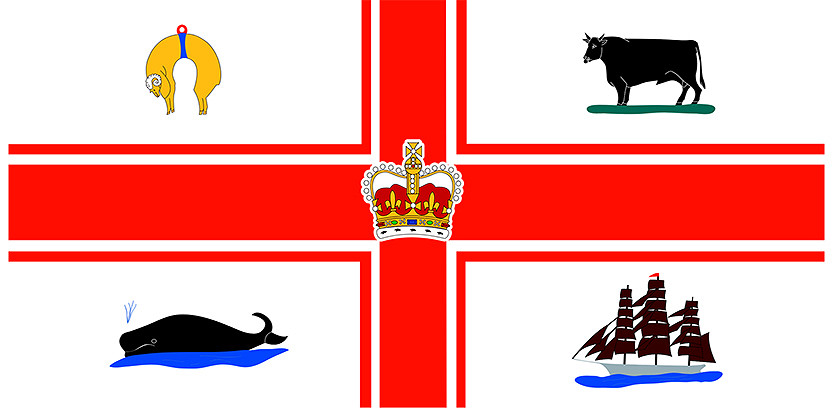
City of Melbourne flag celebrating whaling set to endure
An appeal for the redesign of the little-known flag of Melbourne has met with disinterest from the council, with Lord Mayor Nick Reece linking the issue to a future Australian republic.
Read More
Antisemitism submission sparks protest debate at Town Hall
A City of Melbourne submission to the Royal Commission into Antisemitism that flags changes to the management of Melbourne’s pro-Palestine protests caused division as well as “furious agreement” when it came before the Future Melbourne Committee on May 5.
Read More
Councillors vote for independent Queen Victoria Market governance review
City of Melbourne councillors have voted 10-1 to commission an independent review into the management and governance of Queen Victoria Market, setting up what could become one of the most consequential examinations of the institution in more than a decade.
Read More
Meet Ted – Brown Dog’s very own Brown Dog
New-look Joe Taylor brings Thai flavours to Errol St
 Download the Latest Edition