Lord Mayor and residents slam state over Macaulay planning controls
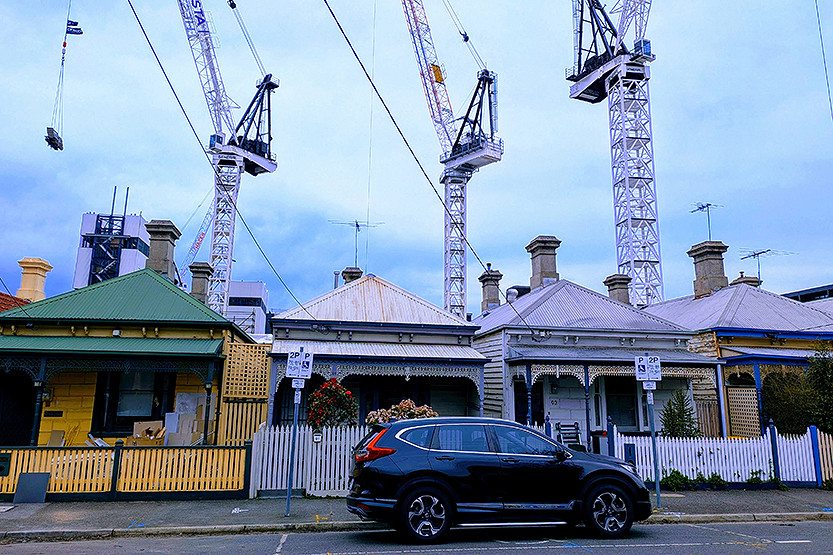

Lord Mayor Nick Reece has launched a stinging attack on the state government’s handling of Macaulay, accusing Planning Minister Sonya Kilkenny of undermining more than a decade of planning work.
The intervention adds fresh political weight to growing criticism of the government’s decision to impose new planning controls across the North Melbourne and Kensington urban renewal precinct despite strong objections from the City of Melbourne and local residents.
The controls came into effect on August 13 after Planning Minister Sonya Kilkenny approved them on July 31.
“This decision undermines years of careful planning for Macaulay,” Cr Reece said, adding that the government had failed to explain how accelerated housing growth would be matched by essential infrastructure.
“The City of Melbourne has worked with government and the community for more than a decade to create a vision for this precinct.”
At the centre of the dispute are floor area ratios (FARs), which regulate how much floor space can be built relative to the size of a development site.
The City of Melbourne wanted mandatory FARs retained. The state-appointed Macaulay Structure Plan Advisory Committee recommended removing them altogether, but said that if the Minister chose to retain them, they should be mandatory.
Instead, the government has adopted discretionary FARs – an approach that neither the council, community nor advisory committee recommended.
Kensington Association chair Dr Kate Kennedy said the government’s description of the controls as a fresh start did not reflect the experience of residents.
“The government presents these controls as a fresh start, but many Kensington residents will see them as the latest chapter in a planning process that has been marked by uncertainty,” Dr Kennedy said.
“The failure to implement the Macaulay Structure Plan 2021 in a timely way left the community, landowners and developers in a prolonged state of limbo.”
What is being announced is less a new vision than a delayed repackaging of issues that have remained unresolved for years.
The newly gazetted controls also provide greater clarity around developer contributions, although questions remain over the long-term funding and delivery of drainage and flood infrastructure.
A separate “Part B” contribution has now been introduced for flood infrastructure, applying the interim Arden rate of $3646 per dwelling to Macaulay.
The “Part A” infrastructure contribution has also been included at a July 1, 2025, base rate of $16,478 .70 per dwelling. Once indexed, the combined Part A and Part B charges are expected to total around $20,843 per dwelling.
That is substantially lower than the previous interim Macaulay contribution of $25,976.
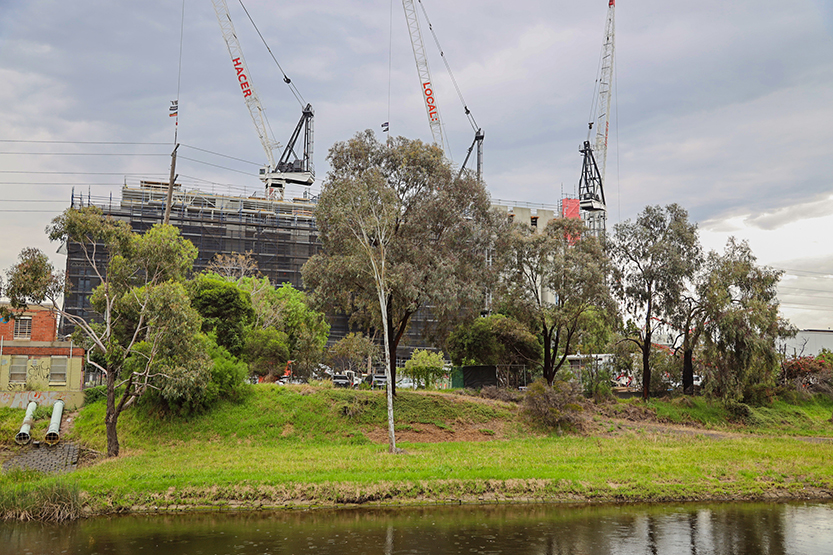
Developments that have already paid the higher interim rate are expected to be eligible for partial refunds, potentially returning several million dollars from council-held development contribution funds.
Despite the new charge, permanent arrangements for major drainage infrastructure are still being developed.
An interim development contributions arrangement will stay in place until May 28, 2028, while the Department of Transport and Planning works with Melbourne Water on longer-term controls.
Dr Kennedy said that uncertainty remained one of the community’s central concerns.
“This is not so much a planning breakthrough as a formalisation of the uncertainty that has characterised Macaulay urban renewal,” she said.
“Residents are being told the controls are ‘locked in’, yet we still have discretionary Floor Area Ratios, an interim Development Contributions Plan while permanent arrangements are developed, unanswered questions about flood planning.”
She also questioned whether the public transport network would be equipped to support the additional population.
“We also have no clear commitment to increased capacity on the Craigieburn and Upfield rail corridors,” Dr Kennedy said.
“If Macaulay is expected to accommodate significant growth because it is a Train and Tram Zone, the community deserves far greater transparency about the infrastructure, services and planning assumptions that will support that growth.”
The government says the new Built Form Overlay will establish clearer development rules for Macaulay, with buildings generally ranging from four to 15 storeys and greater density concentrated closer to transport and CityLink.
A government spokesperson previously said the Minister had considered advice from the advisory committee, department, agencies, the council and community consultation before approving the changes.
“For years, some of Melbourne’s best-connected suburbs have been locked up and it’s pushing young people and families out. We’re changing that,” the spokesperson said.
“We are setting clear rules that will fast track developments to build more homes closer to jobs, transport and services.”
The gazetted package also includes one significant win for the council, with a Public Acquisition Overlay applied to land required to expand Robertson Street Reserve.
However, other sites the council had sought to secure for future open space and infrastructure have not been included, leaving key questions unresolved around Macaulay Terraces, drainage land and government-owned sites.
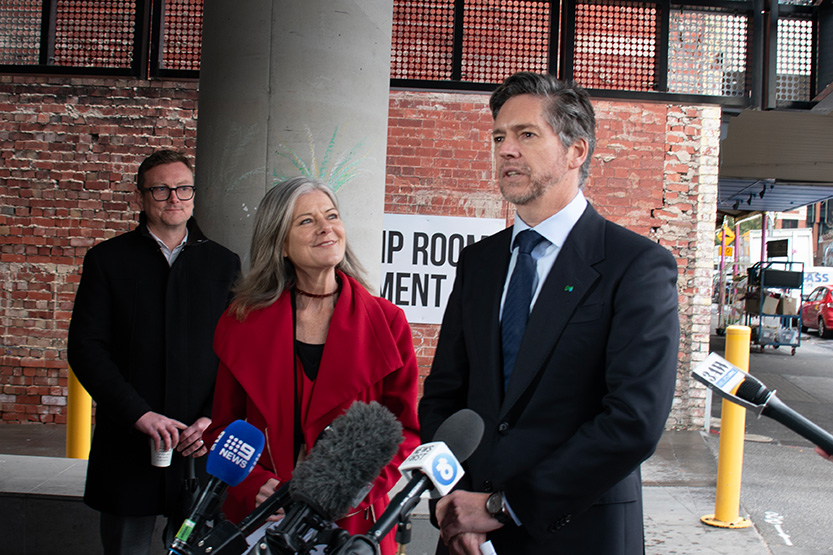
Cr Reece said that lack of commitment was a major concern.
“There is still no commitment to unlock government-owned land in Macaulay to support this level of development – underutilised land that the City of Melbourne could transform into open space,” he said.
“We want more people to be able to live near the city – and we want those future residents to live in neighbourhoods with the infrastructure that make them great places to call home.”
I’m calling on the state government to make that commitment to our community.
The City of Melbourne’s structure plan envisaged about 10,000 residents and 9500 jobs, supported by new parks, community facilities, streets and flood-mitigation works.
Cr Reece said the council supported greater housing growth, but warned homes alone could not create a successful neighbourhood.
“Homes need jobs. Homes need parks. Homes need community facilities. Homes need transport connections. And in Macaulay, homes need proper drainage and flood protection,” he said.
Dr Kennedy said residents remained wary because earlier commitments to infrastructure had still not been delivered.
“The community has heard these promises before,” she said.
“Open space along the Moonee Ponds Creek corridor was a cornerstone of the 2012 Arden-Macaulay Structure Plan, yet remains undelivered more than a decade later.”
“That history matters. It is difficult to build confidence in an ambiguous new planning framework when key community benefits remain unrealised, infrastructure delivery remains uncertain, and our community’s liveability has been progressively eroded.” •
Related Articles
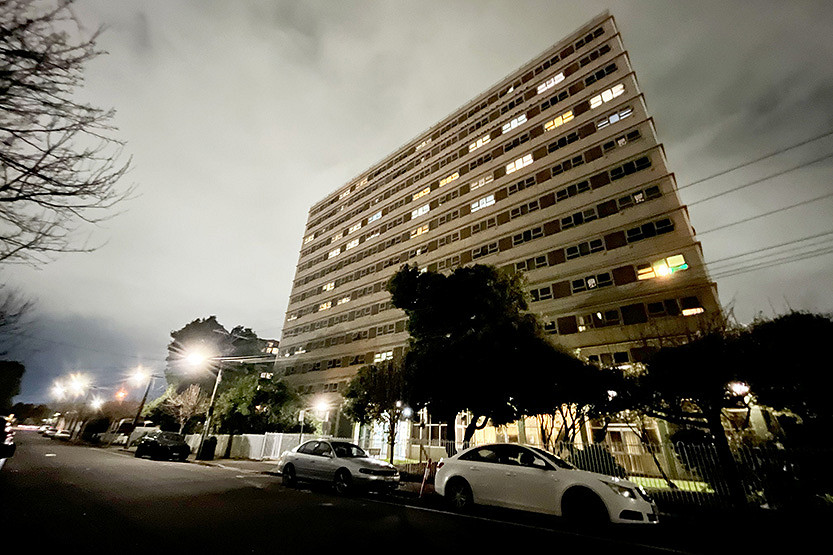
Older public housing residents rally to save their homes
A large group of older residents from public housing towers slated for demolition descended on state parliament this month with a petition calling for the plan to be halted.
Read More
Safety fears over new Racecourse Rd tram stop crossing
The pedestrian crossings at either end of a new tram stop in Racecourse Rd are unsafe, according to local residents, including a woman who suffered serious injuries when she was hit by a car at one of them.
Read More
Heritage mapping disputes head to panel as council moves to fix planning errors
Three disputed heritage mapping issues in Kensington, Carlton and the CBD are set to be referred to an independent planning panel as the City of Melbourne moves to tidy up a series of errors in its planning scheme.
Read More
Meet Ted – Brown Dog’s very own Brown Dog
New-look Joe Taylor brings Thai flavours to Errol St
 Download the Latest Edition