Melbourne Water commences new phase of flood mitigation study


Melbourne Water has launched a major flood mitigation study aimed at reducing flood risk in the Lower Maribyrnong River catchment.
The October 2022 flood event impacted more than 500 properties in Brimbank, Maribyrnong, Melbourne and Moonee Valley local government areas.
New maps were released in April 2024, projecting flood scenarios for both the present day and the year 2100, taking climate change conditions into account.
However, following the mapping, Melbourne Water is undertaking a study, running until mid-2026, which is examining a wide range of structural and non-structural mitigation methods.
Structural options include traditional approaches such as levees, dams and retarding basins, as well as innovative nature-based solutions like wetland restoration and the creation of “sponge land” to absorb urban runoff.
Non-structural approaches may involve flood-resilient home design, improved emergency planning and warning systems, and stronger development controls to reduce risk in built-up areas.
Phase one of the study was completed in June and included a survey of 217 people, 47 per cent of whom were affected by the 2022 flood.
Survey respondents expressed strong support for extended levees, expanded retarding basins or dams, and improvements to stormwater drainage. There was also a call for a reassessment of the Flemington Racecourse flood wall.
Phase two of the study is now underway and includes Community Partnership Panels and public forums to help evaluate and prioritise mitigation options.
Additionally, floor-level surveys will be carried out in Maribyrnong township and surrounding areas to improve the accuracy of flood modelling and inform future communications with residents about property flood risk.
“The study forms part of the work needed to identify, develop and implement flood mitigation options, which will help reduce flood risk, while also reflecting the values of those in our communities as much as possible,” a Melbourne Water spokesperson said.
In October 2023, an independent panel released its report into the causes of the October 2022 Maribyrnong River flood.
The report contained 15 recommendations, which Melbourne Water accepted. These focus on key areas such as flood modelling, forecasting, climate change, land use planning, and long-term sustainable flood mitigation.
Of the 15 recommendations, six have already been met or embedded as standard practice, while the remaining nine are on track for completion.
These include Melbourne Water reviewing its flood models every five years and updating them every 10 years – or sooner following a major flood.
Another recommendation involves improving communication with the Bureau of Meteorology to ensure rainfall forecasts are supplied more frequently than the current six-hour intervals.
Melbourne Water is delivering the study alongside Jacobs, one of the world’s largest providers of flood modelling and mitigation services.
Jacobs has conducted large catchment flood mitigation studies, including the East Side Coastal Resiliency project in New York and the Thames Estuary tidal defence program in London.
Within Australia, some recent and current examples of major catchment riverine flood mitigation include the Brisbane River Strategic Floodplain Management Plan and the Hawkesbury-Nepean Valley Disaster Adaptation Plan.
Additionally, the City of Melbourne is developing new flood maps for Melbourne to reflect current and projected flood risks and to inform future planning decisions.
As a part of the mapping process, the council is asking for people to share their flooding experiences, with the consultation period on Participate Melbourne open until July 27. •
Related Articles
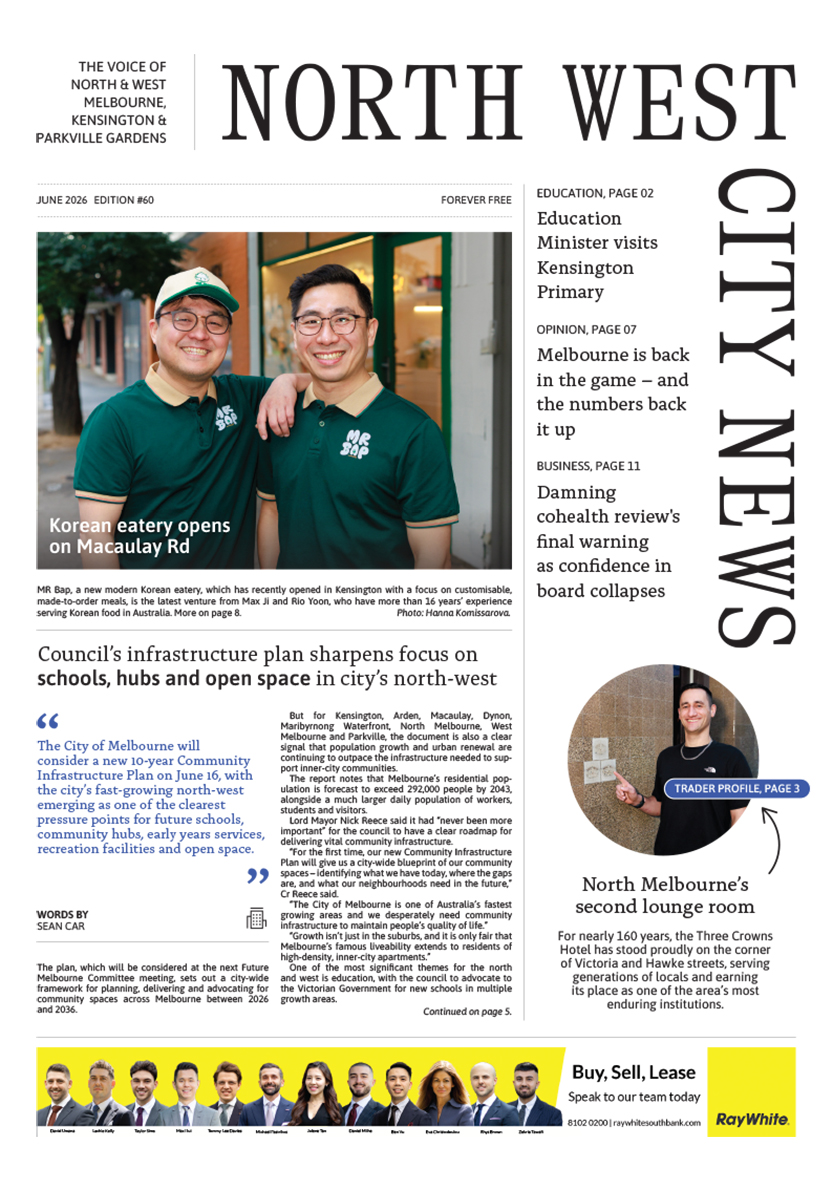
Council’s infrastructure plan sharpens focus on schools, hubs and open space in city’s north-west
The City of Melbourne will consider a new 10-year Community Infrastructure Plan on June 16, with the city’s fast-growing north-west emerging as one of the clearest pressure points for future schools, community hubs, early years services, recreation facilities and open space.
Read More
Kensington church sold to faith-based community
In what looks to be a good news story for the neighbourhood, a 19th century Kensington church that was up for sale has been snapped up by another local church.
Read More
High Court to hear public housing tower demolition challenge
The long-running legal battle over Victoria’s public housing tower demolition program is heading to the nation’s highest court, in a major development for residents in North Melbourne and Kensington fighting to stop the destruction of their homes.
Read More
Council’s infrastructure plan sharpens focus on schools, hubs and open space in city’s north-west
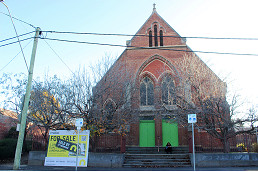
Kensington church sold to faith-based community
 Download the Latest Edition