Reconnect with nature by moon planting
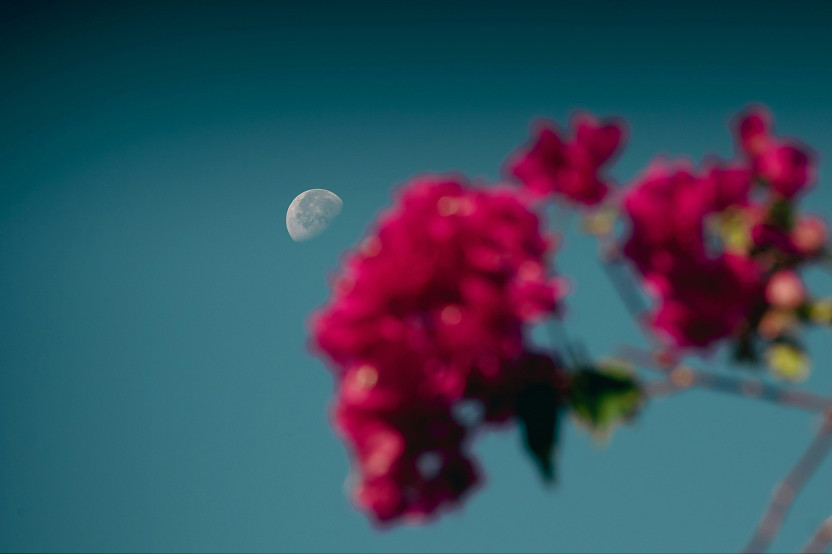

Moon planting offers a way to reconnect with nature and her rhythms while reaping benefits for your garden such as greater harvest yields, effective pest management, improved soil health and enhanced germination and growth potential.
Planting by the moon is a practice deeply rooted within agricultural history from the ancient Egyptians to the Romans and across diverse cultures worldwide from indigenous peoples of North America to ancient civilisations in Europe and Asia.
This practice is simple and capitalises on the magnetic and gravitational impact of the moon at different times in the lunar cycle. The moon’s pull causes rise and falls in tides and likewise influences moisture levels in the soil.
The moon also impacts plant growth through geotropism (how plants grow in response to gravity) – roots grow downward in the direction of gravitational pull, and stems grow in the opposite direction (i.e., upwards).
The lunar cycle lasts about 29.5 days and consists of four distinct phases each with their corresponding influence: new moon, waxing moon, full moon and waning moon.
During new moon and waxing moon phases, the gravitational pull is stronger, leading to increased moisture retention in the soil. This can result in faster germination rates and healthier seedlings when planted during these periods. Seeds absorb more water because moisture is increasingly drawn to the soils surface during this period. This extra moisture causes seeds to swell, promoting stronger germination and better-established plants.
Plants may respond more vigorously when planted within their optimal lunar phases. As a guide during the waxing period plant annual flowers, fruit and vegetables that bear their harvest above ground. During this phase the moonlight increases at night, and plants are encouraged to grow leaves and stems. Plant flowering bulbs, biennial and perennial flowers and vegetables that bear crops below ground during the waning of the moon encouraging growth of tubers, root crops with the downward pull.
By aligning composting and mulching with lunar phases, you can improve soil structure and nutrient availability. Composting during a waning moon allows organic matter to break down more effectively due to reduced evaporation rates. Mulching during this same phase helps retain moisture in the soil while preventing weed growth.
It is believed that certain lunar phases influence insect activity and behaviour.
Common issues in moon planting are to remember that healthy soil is fundamental to successful gardening regardless of the moon cycle, pests still need to be managed, and plant compatibility and each region’s unique pattern needs to be considered when planting.
Observe how different plants respond according to lunar cycles, adjusting your gardening practices accordingly.
By gardening based on lunar cycles, you can reduce reliance on chemical fertilizers and pesticides contributing to building a resilient garden ecosystem. •
Related Articles
Cooling our neighbourhoods
Changes in land cover due to increased urbanisation can affect the urban environment and climate substantially.
Read More
Are Indigenous decision-making processes required for new technological advances?
Indigenous decision-making processes have historically demonstrated high effectiveness through community-based, consensus-driven, and long-term sustainable approaches that have enabled resilience over thousands of years.
Read More
The good news …
With powerful nations rolling back climate protections, temperatures soaring and extreme weather conditions increasing, eco-anxiety is on the increase.
Read More
All Things Equal: a café where inclusion comes first

Council pushes for no-truck zones in Kensington as tunnel impacts deepen
 Download the Latest Edition