Reprieve for public housing tower tenants, but bigger questions loom
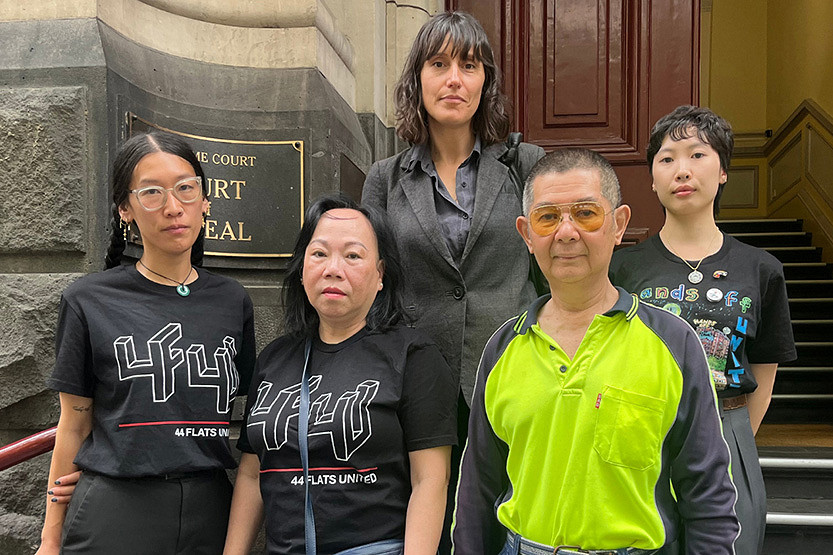
“Hold-out” tenants at three local public housing towers have won a reprieve from eviction on the grounds of their human rights. But some commentators argue the loss of public housing in the planned redevelopments is an issue that affects everyone.
During the first week of February Inner Melbourne Community Legal (IMCL) won an injunction on behalf of its class action clients restraining Homes Victoria from moving to evict 32 households who have so far refused to leave their flats in the three towers, which are scheduled to be redeveloped by 2031.
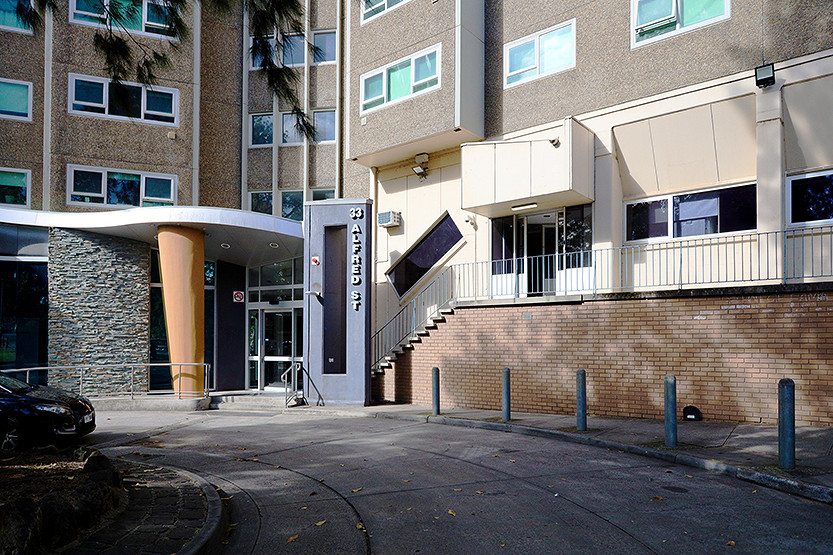
The towers, at 33 Alfred St, North Melbourne and along Racecourse Rd in Flemington, are the first of the 44 the government has announced it will demolish and redevelop by 2051.
The injunction will be in place until the High Court deals with an application for “special leave” to appeal the legality of the government’s decision – a process that could take several months, according to IMCL lawyer Louisa Bassini.
Ms Bassini described the injunction as “certainly a win” for her clients, who wanted “to stay in their homes and neighbourhoods, where they feel connected to their community and to essential services, including health care and public transport”.
The development is the latest in a series of twists and turns for the communities involved, who were blindsided by the announcement in September 2023 that the towers were to be demolished.
The IMCL legal challenge, initiated in January 2024, has so far seen the initial case dismissed in May 2025 and an appeal fail in December.
The Y-shaped Alfred St building has now been emptied of most of its residents, including the action’s former lead plaintiff, Barry Berih, who moved out late last year.
The chance to now have the class action, with new lead plaintiff Jason Mallard, heard in the High Court keeps legal hopes alive for the resident group and others watching it closely.
But according to University of Melbourne urban geographer Dr Kate Shaw, who has focused on public housing renewal programs for more than a decade, the case – while “an excellent initiative that draws attention to very important human rights issues” – is unlikely to save the towers.
“This government is hell-bent on divesting itself from the responsibility of providing housing,” she told North West City News.
“What it wants to do is shift the responsibility to the not-for-profit sector, to ‘community housing’, notwithstanding that it's becoming increasingly clear that community housing organisations are financed by large companies that expect a return on their investment, which is a real problem.”
While there is little transparency around plans for the 44 tower sites, the government has said their current capacity for 10,000 public housing tenants would be increased to 11,000 tenants in “social housing” – an umbrella term that covers both public and community categories.
Another 19,000 new residents would live in private or “affordable” housing.
At Alfred St the current 143 public housing units are to be replaced with 300 community housing dwellings and 500 private or affordable dwellings, with no provision for public housing.
The distinction between community and public is crucial, according to Dr Shaw, because while the community housing sector has many different providers, in general it is much less stable for tenants.
People are being evicted by community housing organisations on unreasonable grounds,” she said. “It is not secure housing, particularly for people whose situation is most precarious.
Undertakings given to relocating tenants that they will be given a new home at their current rental conditions are not guaranteed, in the academic’s view.
“The relocated tenants might have a continued public tenant rate for one year or two years, but there is no certainty,” she said.
Residents’ promised “right of return” once the new housing has been built is another source of uncertainty, with the wording of the government’s commitment unclear.
In Flemington, Homes Victoria plans that the current public housing units in the Racecourse Rd and Holland Drive towers will be replaced with “400 social homes and up to 300 affordable homes”.
According to Dr Shaw, “affordable housing” is an almost irrelevant category because the government’s definition of it as housing that costs up to 90 per cent of market rates makes it unaffordable to people on low incomes.
There are currently 56,500 people waiting for social housing, according to the Victorian Housing Register, while more than 105,000 Victorians sought homelessness assistance last financial year.
In the context of a crisis in low-income housing, critics argue that now is not the time to take public housing stock out of operation.
A recently published “open letter” by a coalition calling itself Building Action Now and signed by more than 570 workers and students from the “built environment industry” is calling on the government to “immediately halt the reckless demolition” of the towers, which it says is being done “without releasing condition reports, feasibility studies or cost-benefit analysis, and without adequately considering the alternative of retrofit and refurbishment”.
The lack of publicly available evidence for the need to redevelop the towers was also a key finding of an opposition-controlled parliamentary committee inquiry last year.
While there were differences of opinion among stakeholders, a clear pattern emerged that the planned 10 per cent social housing increase was inadequate, especially given Victoria’s social housing proportion of just 2.9 per cent – the lowest in Australia.
Dr Shaw argues that building more private market housing won’t ease the crisis because the problem is not lack of middle-to-high income housing but lack of low-income housing.
“We don't need more market housing, there's more than enough market housing,” she says.
The academic believes that when society’s most disadvantaged are properly accommodated in public housing the effect will ripple up through the system, releasing private housing for other low-income households.
“Ultimately it affects the whole housing market so it’s in everybody’s interests,” she says.
“And socially, it's in everybody’s interests to have everybody housed, to get rid of homelessness and reduce the number of people with complex and multiple needs living on the streets.”
In the end, she believes “push will come to shove” on the housing towers and activists will be forming picket lines around them to try to stop the demolition squads.
“When push comes to shove it’ll be people putting their bodies on the line,” Dr Shaw says, “saying to the government, ‘you don't have the right to demolish an important part of Victoria's social justice legacy; it's actually not yours to demolish’.” •
Related Articles
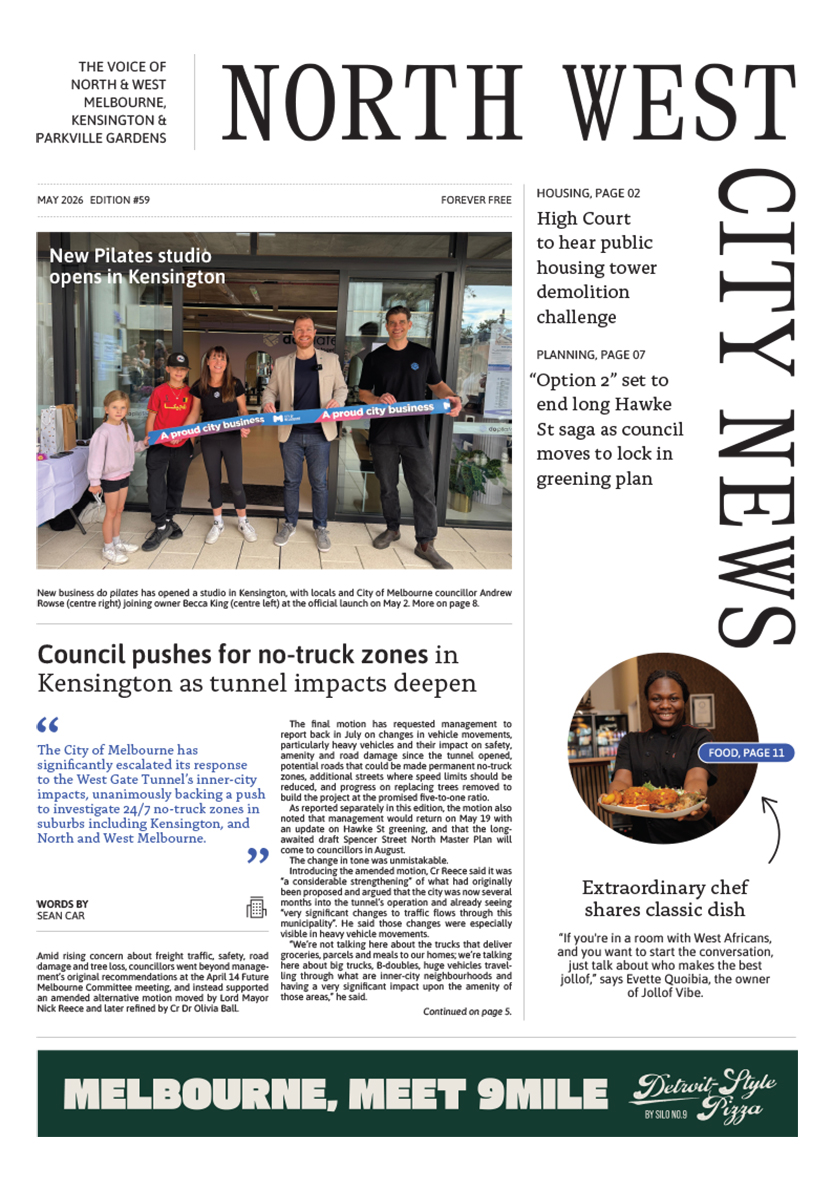
High Court to hear public housing tower demolition challenge
The long-running legal battle over Victoria’s public housing tower demolition program is heading to the nation’s highest court, in a major development for residents in North Melbourne and Kensington fighting to stop the destruction of their homes.
Read More
Parliamentary Inquiry calls for Victorian Government to pause public housing demolition
A parliamentary inquiry has recommended that the Victorian Government halt work on its plan to demolish and redevelop 44 public housing towers, prompting renewed calls from community legal centres for greater transparency and evidence behind the policy.
Read More
Council selects partner for key worker housing project in West Melbourne
The City of Melbourne has selected a preferred community housing provider (CHP) to develop new affordable housing for key workers on council-owned land in West Melbourne.
Read More
High Court to hear public housing tower demolition challenge

All Things Equal: a café where inclusion comes first
 Download the Latest Edition