North and West Melbourne, Kensington score key wins in cautious council budget
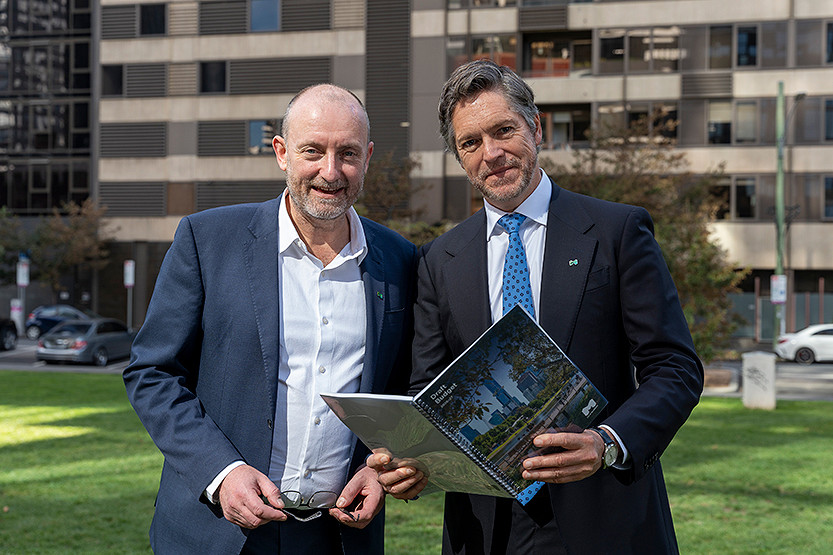
The City of Melbourne’s 2026-27 draft budget is, overall, a careful and fiscally restrained document.
It delivers a third straight underlying surplus of $1.2 million, keeps the council on a path to reduce debt to $60 million by the end of the current term and to zero by 2032, and largely protects day-to-day services at a time of rising costs and a tight rates-capped environment.
But for North and West Melbourne and Kensington, the more immediate story is that this budget contains a meaningful cluster of local investments, particularly in community infrastructure, open space and neighbourhood amenity.
Such investments matter in these suburbs, which are absorbing growth from Arden-Macaulay, living with the consequences of the West Gate Tunnel, and continuing to press the council and state government for the local facilities that should accompany denser inner-city living.
Among the biggest local wins is a $3.5 million allocation to finalise designs for the new North Melbourne Community Hub in the Macaulay precinct, a long-awaited project intended to provide a more modern and accessible community facility for a growing population. There is also funding to create 2500 sqm of new open space at the Chapman St pocket park in North Melbourne, part of the council’s broader push to expand green space across dense inner-city neighbourhoods.
In Kensington, the budget proposes a $6.4 million investment to transform a warehouse on Chelmsford St into a new community space for relaxation, exercise, play and connection with nature and Country. In practical local terms, that is one of the stronger commitments in the whole budget.
The budget also continues to back neighbourhood-level recreation and wellbeing measures, including the expansion of the council’s free swim program and upgrades to local fitness equipment. These are not headline-grabbing items in the way a new building or park might be, but they speak to a budget that is still investing in everyday liveability.
That local focus sits inside a broader city budget that is prudent on paper, but not without trade-offs.
As finance chair Cr Owen Guest made clear when the budget was released, the improved debt outlook has not been achieved by scrapping services, but largely by pushing parts of the capital works program further out. The city’s capital works forecast declines over the forward estimates, from $175.1 million next year to $161 million, then $145.6 million and $135.3 million in subsequent years. The council says this is about stabilising delivery. The risk, of course, is that projects delayed today may cost more tomorrow in a construction market still being squeezed by labour and materials inflation.
That matters for the inner north and west, where communities are already used to waiting.
At the same time, the budget’s clearest political emphasis remains safety and cleanliness, and that has direct local implications. The council is proposing to double its Community Safety Officer program from 11 officers to 22, supported by an extra $1.7 million, while also expanding the Safe City camera network by up to 150 cameras and investing in a new dedicated outreach team to work alongside the CSOs and support rough sleepers and other vulnerable people.
For local communities, those investments will be watched closely. They come at a difficult moment for the program, after The Age reported allegations from a former CSO about low morale, confusion around powers and problematic internal culture. The council has responded by standing behind the initiative, saying: “Our Community Safety Officers are making a real difference on Melbourne’s streets – supporting vulnerable people and stepping in early to prevent antisocial behaviour.” The city says the team has already been involved in more than 5000 interactions since launching in October 2025, and that officers receive training in trauma-informed engagement, mental health, substance use awareness, cultural safety and family and gendered violence prevention.
Still, the expansion is likely to prompt questions about how the program operates and its effectiveness.
There are also the unavoidable costs. Rates are rising again under the full 2.75 per cent state cap, after last year’s much-publicised rebate only deferred the increase. Parking fees will also go up modestly for the first time in eight years. That means households and local traders are being asked to pay more at a time when the council is simultaneously talking discipline and delay.
Consultation on the draft budget is open until April 28, with a special Future Melbourne Committee hearing on May 12 before final adoption on May 26. •
Related Articles

City of Melbourne flag celebrating whaling set to endure
An appeal for the redesign of the little-known flag of Melbourne has met with disinterest from the council, with Lord Mayor Nick Reece linking the issue to a future Australian republic.
Read More
Antisemitism submission sparks protest debate at Town Hall
A City of Melbourne submission to the Royal Commission into Antisemitism that flags changes to the management of Melbourne’s pro-Palestine protests caused division as well as “furious agreement” when it came before the Future Melbourne Committee on May 5.
Read More
Councillors vote for independent Queen Victoria Market governance review
City of Melbourne councillors have voted 10-1 to commission an independent review into the management and governance of Queen Victoria Market, setting up what could become one of the most consequential examinations of the institution in more than a decade.
Read More
Meet Ted – Brown Dog’s very own Brown Dog
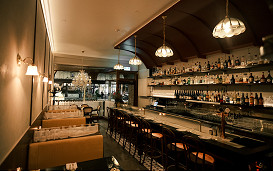
New-look Joe Taylor brings Thai flavours to Errol St
 Download the Latest Edition