Victoria St speed cuts and Hawke St greening among latest West Gate Tunnel responses
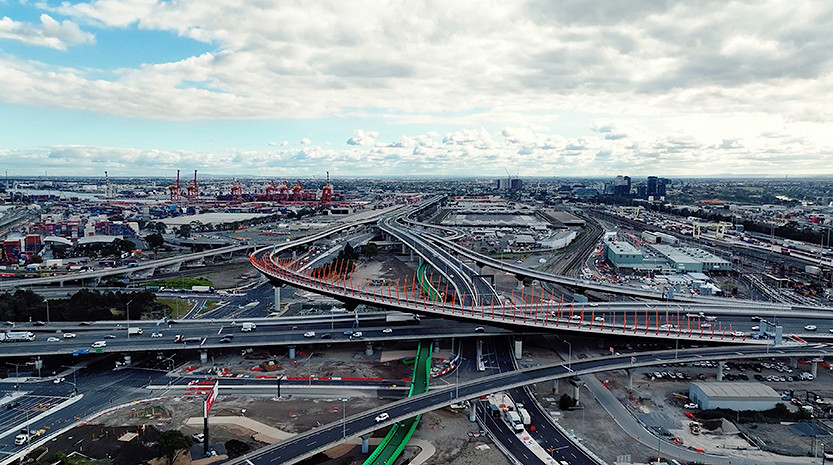

The City of Melbourne has provided its latest update on the impacts of the West Gate Tunnel, outlining a series of responses now under way across North and West Melbourne and Kensington as traffic patterns continue to settle following the tunnel’s opening in December.
Among the most immediate changes flagged is a long-sought speed reduction on Victoria St, with the Department of Transport and Planning proposing to lower the limit from 60 km/h to 50 km/h between Dryburgh and Curzon streets. The reduced 50 km/h limit is also set to extend further east along King St between Curzon and Dudley streets, with the changes expected to be in place by mid-2026.
For local residents, that is one of the clearer wins to emerge from the latest round of advocacy following months of concern about safety, rat-running and traffic impacts linked to the West Gate Tunnel and its associated freight redistribution.
The update, considered by councillors at the April 14 Future Melbourne Committee meeting, follows the intense debate at the November 25 council meeting, when councillors and residents criticised delays in the $100 million Transport and Amenity Program and accused the state of taking a “wait and see” approach after the tunnel opened. The new report says all follow-up actions requested at that meeting have now been completed.
It also confirms that the tunnel has been heavily used since opening. By early February, more than one million vehicles had travelled through the inbound and outbound tunnels, with more than 20 per cent of those vehicles being trucks.
That figure goes some way to explaining why Kensington residents have remained so focused on local freight impacts.
As previously reported by North West City News, a community petition calling for a truck ban on Kensington Rd was presented to council at its March 17 Future Melbourne Committee meeting. The latest council report acknowledges those concerns, noting that the City has heard directly from the community about increased truck movements in Kensington and has been working with DTP to review and mitigate them.
According to the report, that work now includes traffic counts at the intersection of Epsom Rd, Kensington Rd and Macaulay Rd, analysis of freight movements, development of a signage strategy to redirect heavy vehicles away from local streets, assessment of possible truck bans on Kensington and Epsom roads with DTP and the National Heavy Vehicle Regulator, and exploration of infrastructure changes to help deter trucks from key routes and intersections.
For West Melbourne residents, another major point of interest is the Hawke St project.
The report confirms that maps showing underground services and tree planting constraints were published in December 2025, with a more detailed map to be released this month after questions raised during community engagement. It also says the Hawke St consultation process was completed between December and February, and that a report on the greening concept is scheduled to go back to councillors on May 19. Design work is continuing with a view to going to tender in October 2026.
That timeline is still slow by local expectations, but it at least offers a clearer pathway after last year’s embarrassing revelation that a major gas main and other service constraints had derailed the original linear park concept.
Further north, the long-awaited Spencer Street North Master Plan is also inching forward. The update says the draft master plan will be revised following internal stakeholder input and presented to councillors for initial discussion in August 2026. If endorsed, public consultation would then occur later in the 2026-27 financial year.
Dynon Rd is also progressing in stages, with Stage 1 upgrades between the CityLink underpass and Lloyd St moving towards delivery and completion, while design for the Sims St intersection is due by June 2026.
The report also touches on broader environmental and open space issues linked to the tunnel project. It notes that operational environmental monitoring, including for noise and air quality, is commencing this month, while the Moonee Ponds Creek master plan remains one of the unfinished initiatives still being delivered in response to the project’s environmental effects process. The City of Melbourne says it will now work with DTP on that master plan following the merger of the Victorian Planning Authority into the department.
Tree planting is also due to continue from April, although the report cautions that while the project is expected to meet its overall 5:1 replacement ratio, that outcome will not be achieved within the City of Melbourne itself. Discussions are continuing with project authorities about how to close that gap locally.
Taken together, the latest update suggests that after months of community frustration, the City is gradually moving from reaction to a more concrete package of responses. But it also reinforces how much remains unresolved.
Speed limits on Victoria St now appear likely to fall. Hawke St greening has a clearer next step. Spencer St North and Dynon Rd are progressing, albeit slowly. Kensington’s truck concerns are now formally in the system. Yet the broader picture remains one of a city still trying to soften the effects of a tunnel it never wanted in the first place.
The next major milestones will be the Hawke St report in May, further traffic monitoring over the six-month post-opening period, and the Spencer Street North master plan returning to councillors in August. •
Related Articles
Lord Mayor and residents slam state over Macaulay planning controls
Lord Mayor Nick Reece has launched a stinging attack on the state government’s handling of Macaulay, accusing Planning Minister Sonya Kilkenny of undermining more than a decade of planning work.
Read More
Older public housing residents rally to save their homes
A large group of older residents from public housing towers slated for demolition descended on state parliament this month with a petition calling for the plan to be halted.
Read More
Safety fears over new Racecourse Rd tram stop crossing
The pedestrian crossings at either end of a new tram stop in Racecourse Rd are unsafe, according to local residents, including a woman who suffered serious injuries when she was hit by a car at one of them.
Read More
Meet Ted – Brown Dog’s very own Brown Dog
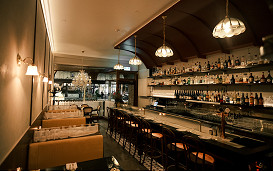
New-look Joe Taylor brings Thai flavours to Errol St
 Download the Latest Edition