Council pushes for no-truck zones in Kensington as tunnel impacts deepen
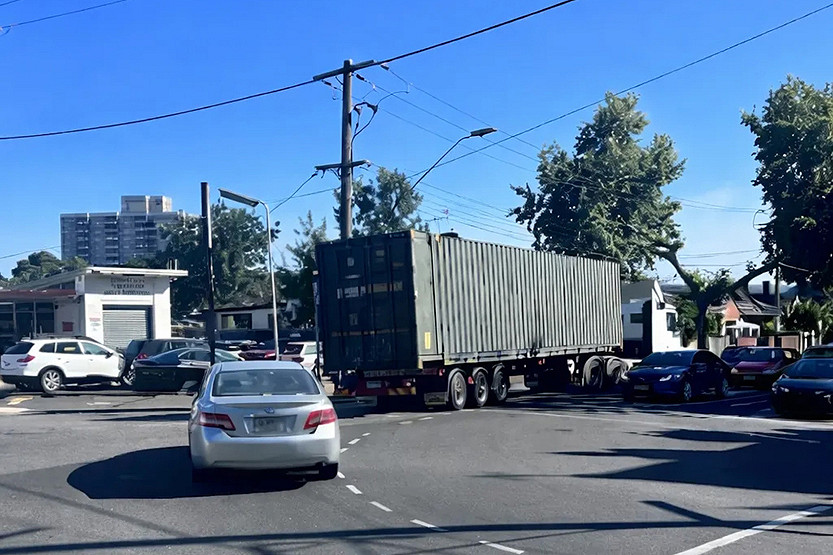
The City of Melbourne has significantly escalated its response to the West Gate Tunnel’s inner-city impacts, unanimously backing a push to investigate 24/7 no-truck zones in suburbs including Kensington, and North and West Melbourne.
Amid rising concern about freight traffic, safety, road damage and tree loss, councillors went beyond management’s original recommendations at the April 14 Future Melbourne Committee meeting, and instead supported an amended alternative motion moved by Lord Mayor Nick Reece and later refined by Cr Dr Olivia Ball.
The final motion has requested management to report back in July on changes in vehicle movements, particularly heavy vehicles and their impact on safety, amenity and road damage since the tunnel opened, potential roads that could be made permanent no-truck zones, additional streets where speed limits should be reduced, and progress on replacing trees removed to build the project at the promised five-to-one ratio.
As reported separately in this edition, the motion also noted that management would return on May 19 with an update on Hawke St greening, and that the long-awaited draft Spencer Street North Master Plan will come to councillors in August.
The change in tone was unmistakable.
Introducing the amended motion, Cr Reece said it was “a considerable strengthening” of what had originally been proposed and argued that the city was now several months into the tunnel’s operation and already seeing “very significant changes to traffic flows through this municipality”. He said those changes were especially visible in heavy vehicle movements.
“We’re not talking here about the trucks that deliver groceries, parcels and meals to our homes; we’re talking here about big trucks, B-doubles, huge vehicles travelling through what are inner-city neighbourhoods and having a very significant impact upon the amenity of those areas,” he said.
Cr Reece added that the issue was now being felt widely, “from Kensington, to Macaulay, through West Melbourne, North Melbourne, and Carlton”, and pointedly contrasted the situation in Melbourne’s inner north-west with the western suburbs, where roads such as Francis St, Somerville Rd, Buckley St, Moore St, Hudsons Rd and Blackshaws Rd were made 24/7 no-truck zones when the tunnel opened. “We have not seen the same thing happen at the east end of the West Gate Tunnel,” he said.
For Kensington residents, who have spent months warning that the tunnel would simply shift freight impacts eastward, the council’s decision is likely to be viewed as a major win.
Speaking to the committee, Kensington Association chair Dr Kate Kennedy said the suburb had long feared exactly this outcome and had been raising concerns about rat-running and truck safety since 2016 through the West Gate Tunnel Community Liaison Group.
We did feel that rat-running would become an issue here, she said, adding that truck safety had long been an issue close to residents, seeing that we’ve lived with some fairly tragic truck accidents over the years, three in particular, two resulting in deaths and one was someone who is a quadriplegic and still lives in our neighbourhood.
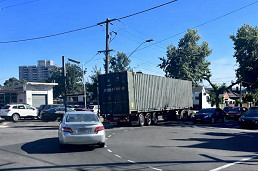
Dr Kennedy said Kensington residents had become almost obsessive about documenting truck movements, with locals photographing heavy vehicles and posting them online, while also noticing signs of road damage, especially on Macaulay Rd where a historic sewer collapse decades ago remains in local memory.
The Kensington Association’s written submission reinforced those concerns, saying the “current volume of HV traffic indicates that the WGT opening has resulted in increased heavy vehicle movement and rat-running via Macaulay Rd, Epsom Rd and Kensington Rd”. It said residents were concerned not only by their lived experience of more trucks, but also by resulting road wear and an “anomaly” in the Macaulay Rd truck-ban rule.
That anomaly has become an important local issue. The submission argues that current exemptions tied to vehicle height allow many trucks to avoid the Newmarket Rd restriction and instead use Macaulay Rd, undermining the purpose of the ban.
The association wants the rule reviewed and narrowed so Macaulay Rd functions only as an over-dimensional and over-mass route, not as a broader alternative for heavy vehicles.
Management’s presentation to councillors suggested those concerns are at least reflected in early data. Infrastructure boss Rick Kwasek said monitoring had already shown an “uplift in volumes” on Kensington Rd and Epsom Rd, with a slight reduction on Macaulay Rd, though he stressed that work was continuing with the Department of Transport and Planning to understand vehicle classifications and compare current movements with the pre-opening baseline.
The issue is not just trucks, but what streets can safely absorb them.
West Melbourne residents have been especially vocal about Victoria and King streets, where the state is proposing to reduce the speed limit from 60 km/h to 50 km/h between Dryburgh and Curzon streets on Victoria St, and between Curzon and Dudley streets on King St, by mid-2026. Mr Kwasek described this as a “key initiative” following strong feedback from North Melbourne and West Melbourne residents about increased speeds since the tunnel opened.
But many residents believe even that reduction does not go far enough.
Jamie Paxton, in a detailed letter to Transport Minister Melissa Horne shared with North West City News, argued that the state’s plan still allowed unsafe heavy vehicle speeds through a residential corridor with a long crash history.
He pointed to data showing 62 casualty crashes on the relevant section of King and Victoria streets over the past five years, including 25 serious injuries, more than 20 times the minimum threshold for a metropolitan black spot. He also noted that the same corridor had nearly three times as many serious injury accidents as Spencer St over the same period.
Mr Paxton said the corridor intersected numerous community facilities, including Flagstaff Gardens, schools, a crisis accommodation service, North Melbourne Primary School and North Melbourne Station, and warned that a B-double truck travelling at 60 km/h needed 90 metres to stop. He argued that the state should reduce speeds to 40 km/h along King and Victoria streets and to 20 km/h at the Curzon St intersection.
That broader question about 40 km/h local roads also surfaced in the council debate. Supporting the amended motion, Cr Dr Ball reminded colleagues that the city’s own Transport Strategy 2030 set an objective for local roads to be no more than 40 km/h, a point later confirmed by Mr Kwasek.
Cr Dr Ball said the amended motion highlighted three key issues beyond the immediate speed reduction proposals: trucks, tree replacement and local road speeds.
She singled out the revelation that the promised 5:1 replacement ratio for trees removed to build the West Gate Tunnel would not be achieved within the City of Melbourne, despite previous commitments from ministers and the project’s approval process. “To find in this report that the State Government finds that it cannot achieve or does not intend to achieve that 5:1 promised replacement ratio is of great concern,” she said.
Mr Kwasek told councillors that around 824 trees had been removed for the project and that while the overall 5:1 ratio would be met across the broader tunnel corridor, “that won’t be within the City of Melbourne”. said the then-Transport Infrastructure Minister Danny Pearson had written to the Lord Mayor in 2024 committing to identify additional planting opportunities in the municipality, and that the city had already identified purple-shaded locations in its urban forest plans where additional planting could occur if compensation or direct delivery were secured.
Cr Davydd Griffiths, supporting the motion, said it was vital not just to meet the technical ratio, but to honour the spirit of the earlier promises so that those neighbourhoods which had lost the trees were the ones that benefited from replanting.
Management will not just analyse truck volumes and classifications, but will also specifically examine roads that could be turned into 24/7 no-truck zones, including through a review of signage and exemptions.
It will also look at where additional speed reductions may be needed to respond to heavy vehicle impacts, and at how the city can hold the state to its tree-planting promises.
For residents across Kensington and West Melbourne, that represents a meaningful escalation.
Whether it ultimately leads to no-truck zones on roads such as Kensington Rd, Epsom Rd, Macaulay Rd or in parts of North and West Melbourne remains to be seen. But after months of frustration, the signal from Town Hall is now much stronger: the council is preparing to seriously test whether Melbourne’s inner-city neighbourhoods deserve the same protections as those in the western suburbs. •
Related Articles
High Court to hear public housing tower demolition challenge
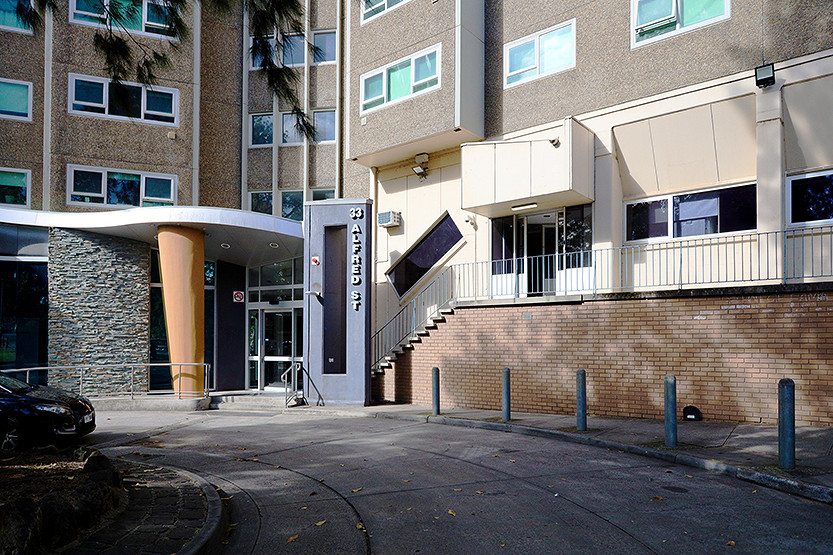
The long-running legal battle over Victoria’s public housing tower demolition program is heading to the nation’s highest court, in a major development for residents in North Melbourne and Kensington fighting to stop the destruction of their homes.
Read More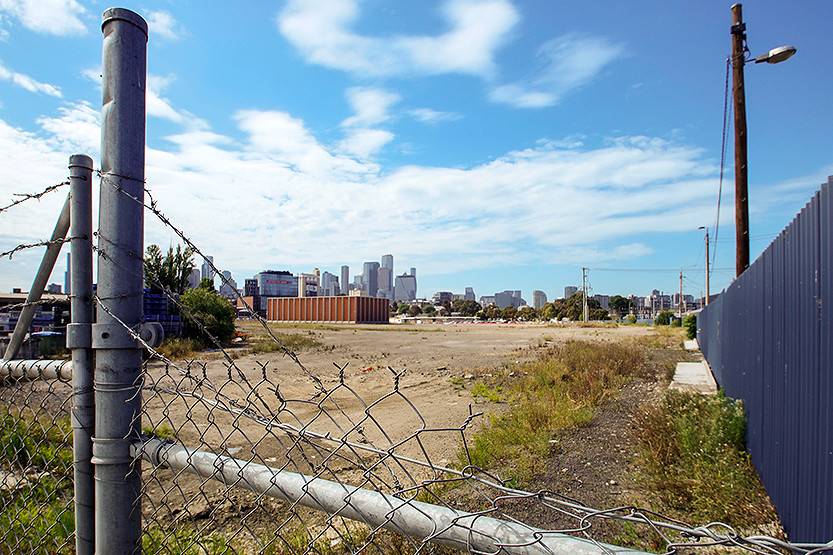
Fresh budget funding keeps Arden Secondary School moving, but questions remain
The long-awaited Arden Secondary School has received a further funding boost in the Victorian Budget, offering another positive sign that planning for the new inner-city high school is continuing, even if key details remain frustratingly unclear.
Read More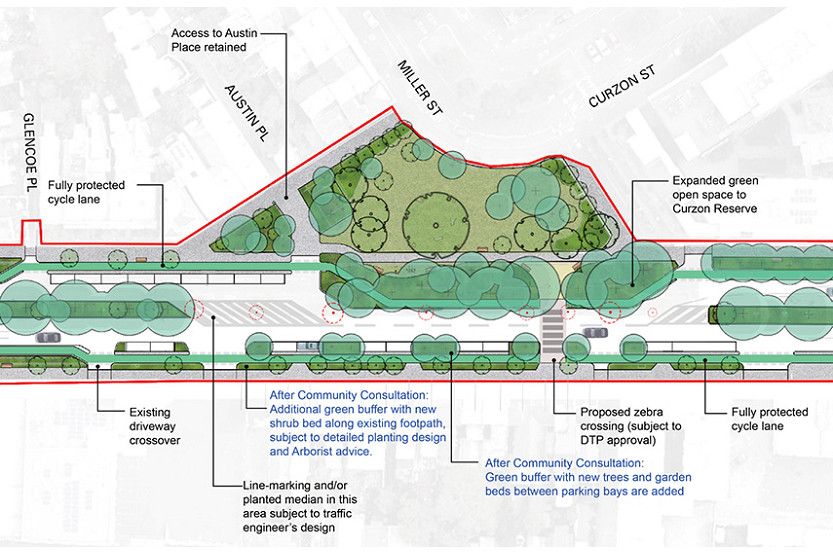
“Option 2” set to end long Hawke St saga as council moves to lock in greening plan
After years of redesigns, delays and community frustration, the City of Melbourne appears finally set to bring the long-running Hawke St greening saga to a close, with councillors expected to endorse the now clearly preferred “Option 2” at the Future Melbourne Committee meeting on May 19.
Read More
All Things Equal: a café where inclusion comes first
Council pushes for no-truck zones in Kensington as tunnel impacts deepen
 Download the Latest Edition