Dumped “nangs” on the increase
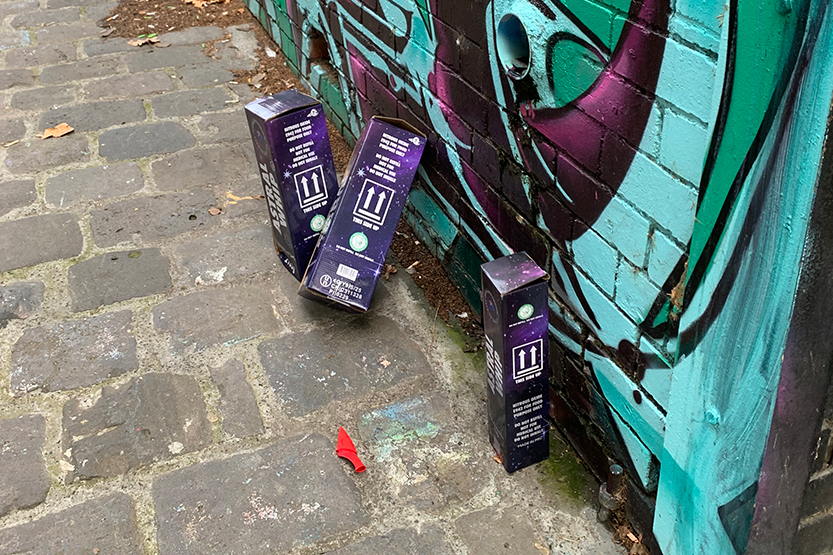
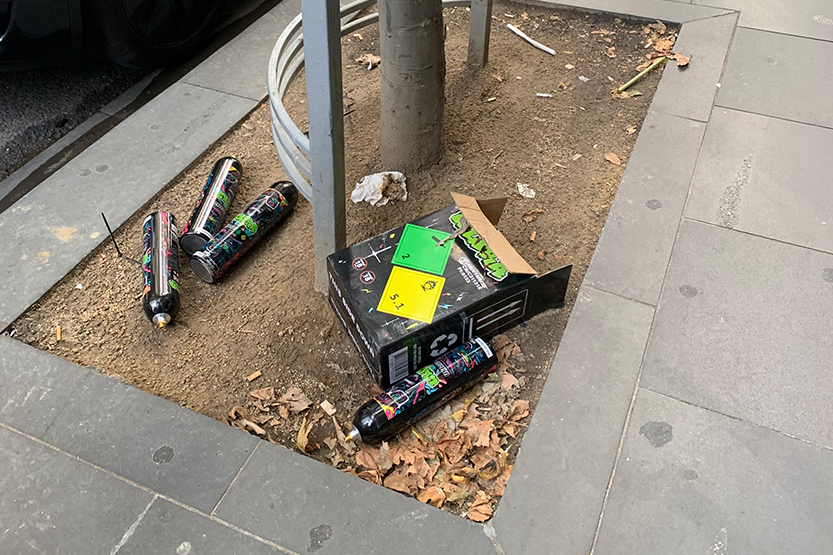
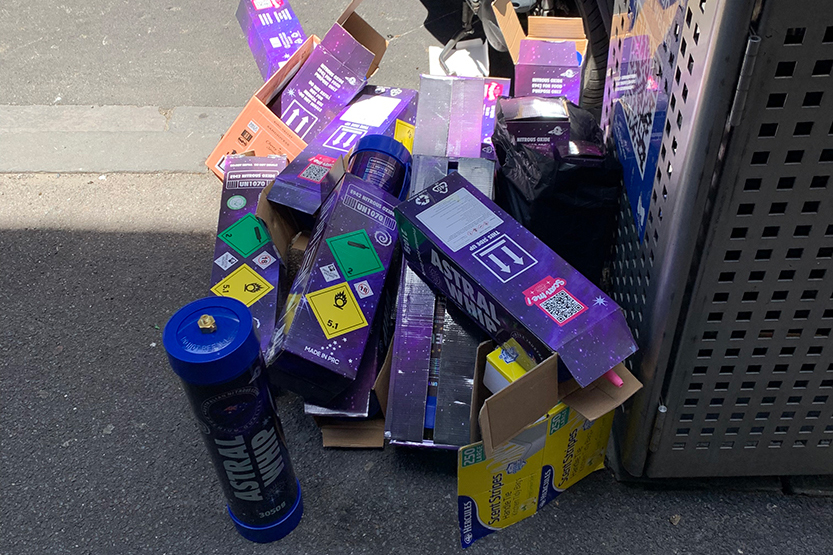
The use of nitrous oxide, or laughing gas, as a recreational drug appears to be increasing in the CBD and West Melbourne, with local residents reporting empty cannisters being left lying around or stacked beside bins more and more frequently.
“They’re everywhere,” said one West Melbourne local, who recently spotted the containers, known colloquially as “nangs”, discarded in the CBD, Docklands, Flagstaff Gardens and near Festival Hall.
He had also seen a person by themselves apparently inhaling the gas in a laneway, he said.
Nitrous oxide, which is being used recreationally by young people in many countries around the world, is listed as a Schedule 6 poison under Australia’s Drugs, Poisons and Controlled Substances Act – meaning it is considered to have moderate potential for causing harm, which can be reduced through strong warnings and safety directions on packaging.
The sale or supply of the gas for inhalation outside of medical settings is prohibited in Victoria.
In Melbourne, it is readily available, including via 24-hour-a-day, seven-day-a-week home delivery by companies professing to sell it for culinary purposes.
An odourless, colourless compound used among other things to whip cream, nitrous oxide, when inhaled, is “rapidly absorbed by the body and produces a rush of euphoria, heightened consciousness and disassociation that includes both anaesthetic and sedative components,” according to a report by the Victorian Coroner’s Court.
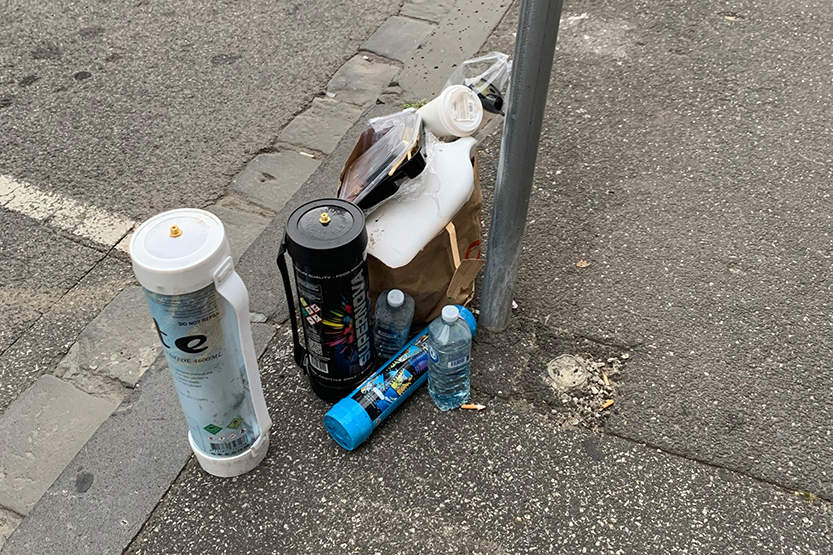
The effects last for about a minute.
But the environmental impacts may endure a lot longer.
According to a recent international report, the gas, which is also generated by agricultural fertilisers, is a major contributor to global warming, with a potential climate change impact nearly 300 times that of carbon dioxide over a 100-year time scale.
The steel cannisters it comes in – ranging from 6cm long bulb-shaped vessels to 3.3l tanks – are not reusable and in the City of Melbourne can’t be disposed of in recycling or rubbish bins.
The regular appearance of the containers, which are classified by the EPA as hazardous waste requiring specialised disposal, has been causing some local residents concern.
The council reportedly responds quickly to reports of the dumped vessels, removing them from public places and taking them to steel recycling facilities.
And according to an RMIT chemical expert, the cannisters are unlikely to be an explosion risk to passersby.
They do, however, pose a tripping hazard.
Deputy head of research at RMIT chemistry department Vipul Bansal told North West City News the cylinders were pressure-tested and shouldn’t “burst by themselves”, and they would be even less likely to do so if they were partly used.
Any risk would come from high heat, he said.
So, if they’re lying in the sun, they could burst if they’re full.
In his view, the real risk was if the cannisters were improperly disposed of, and accidentally compacted or incinerated.
He also cited concerns about the health impacts on users.
While nitrous oxide was generally considered a comparatively safe recreational drug, its use was not without risk, according to Victorian Coroner Audrey Jamieson, who last year investigated the 2023 death of a 26-year-old Elsternwick man who suffocated after inhaling the gas through a mask.
Her report noted that 11 Victorian deaths between 2000 and 2023 where recreational use of nitrous oxide was a contributing factor had been identified – eight of them since 2020.
The deaths had occurred through either dangerous use of the gas, for example by administering it through a mask; using it in a dangerous setting, such as near water; or chronic high-level use, which dramatically impacted the user’s health, particularly through vitamin B12 deficiency and malnutrition, the Coroner said.
In early April the ACT Coroner released a report into another 2023 death, which occurred when an 18-year-old inhaled the gas before driving his Commodore into a pond in Canberra.
Both coroners recommended the legal frameworks around access to nitrous oxide in their jurisdictions be reviewed.
According to the Victorian health department, using the gas can cause “very serious health problems such as irreversible nerve damage, especially in large volumes or if used very frequently."
Media reports have described cases where people have lost the use of their legs or developed psychosis as the result of heavy use.
The Department of Health and Human Services said the enforcement of regulations around accessing the gas was a matter for Victoria Police but that it was reviewing the regulations.
Victoria Police declined to comment on the issue.
The City of Melbourne said inappropriate disposal of nitrous oxide cannisters was investigated as a serious offence, with penalties ranging from $814 to $12,000 if an offender was successfully prosecuted.
The EPA didn’t respond to a request for information. •
Related Articles

Trio charged over QVM ATM explosion
Three men from Melbourne’s inner north will appear in court next month charged with blowing up an ATM machine at the Queen Victoria Market in May and stealing around $5000.
Read More
Police briefs North West City - February 2026
A North Melbourne man has been charged with multiple counts of possessing an imitation weapon after Victoria Police searched a property in Melrose St and found two 3D-printed handguns, 3D ammunition, an imitation revolver and an imitation long-armed rifle.
Read More
“An appalling process”: Council warns Macaulay vision is being pulled apart
Minister must not ignore the communities that shaped Arden-Macaulay
 Download the Latest Edition