Minister must not ignore the communities that shaped Arden-Macaulay

For more than a decade, communities in North Melbourne, West Melbourne and Kensington have been asked to participate in the future of Arden-Macaulay.
They have attended meetings, written submissions, shared local knowledge and, in many cases, shown remarkable patience as questions around open space, schools, drainage, affordable housing and infrastructure have remained unresolved.
After the City of Melbourne's July 7 Future Melbourne Committee meeting, that patience is being severely tested.
In one extraordinary night of planning, councillors were given a worrying window into the future of two of Melbourne’s most important urban renewal precincts. In Macaulay, the state’s advisory committee process appears to have pulled apart years of council-led planning and community input. In neighbouring Arden, two major development proposals showed what can happen when the promise of renewal begins to collide with fast-tracked planning.
One Arden proposal, for a huge tower on Arden St, was rejected outright by councillors. Another, at Munster Terrace, was only supported subject to major conditions around height, overshadowing, affordable housing, apartment mix and amenity. The applicant opposed many of those conditions.
This is not anti-development sentiment. These are communities that understand growth is coming. Arden-Macaulay has long been earmarked for more homes, jobs and density. But density without open space, schools, drainage, community facilities and meaningful affordable housing is not planning. It is simply development.
Kensington residents have particular reason to feel aggrieved. Macaulay was a council-led process, shaped over many years with the community’s involvement. Locals invested time, energy and trust into a structure plan that sought to balance growth with liveability. The state government’s apparent about-face through the advisory committee process feels, to many, like a slap in the face.
Even seemingly straightforward ambitions, such as creating open space along Moonee Ponds Creek, have become a “complexitron” of bureaucracy involving land ownership, drainage, flood modelling, development contributions and ministerial decision-making. Meanwhile, apartment towers keep rising and the need for green space becomes more urgent.
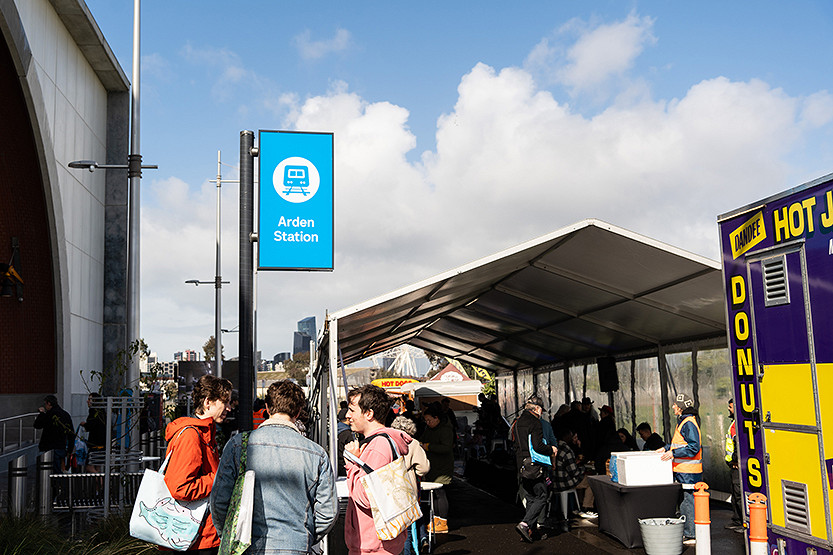
Arden tells a similarly troubling story. For years, the community has been fed mixed messages: hospitals, then no hospitals; affordable housing targets, then weakened expectations; a promised school, but no clear site or timeline; a Metro station, but unresolved questions about what will surround it.
It is often said that Arden must not repeat the mistakes of Docklands. But the existence of a railway station does not guarantee good planning. Southern Cross Station was there long before much of Docklands rose around it, and that did not save the precinct from long-running criticisms about poor public realm, weak community infrastructure and a lack of human scale.
It should also concern the community that Development Victoria, the same agency that led Docklands’ development, is now leading Arden Central through a process to select a single master developer. That does not mean Arden is destined to fail. But it does mean the Minister for Planning must be especially careful not to let commercial urgency override the public interest.
Current Planning Minister Sonya now has a profound responsibility.
The Development Facilitation Program may be designed to get housing moving, but fast-tracking cannot become a shortcut around context. Context matters, Minister. The people who live in these neighbourhoods now matter. The people who will live there in 10, 20 and 30 years matter too.
Before signing off on decisions that could shape Arden-Macaulay for generations, the Minister must give proper weight to the years of taxpayer-funded planning work already done, and to the communities that helped shape it.
These precincts can still become examples of well-planned urban renewal. But only if liveability is treated not as an optional extra, but as the foundation. •
Related Articles
The village next door
On what has changed in North and West Melbourne – and what never did.
Read More
Melbourne is back in the game – and the numbers back it up
The federal government’s decision to fund the Suburban Rail Loop confirms a fundamental shift: Melbourne is once again a city that government cannot afford to ignore.
Read More
Will Richter Memorial Ride
As a member of the “bike riding community”, I know many people across Melbourne who ride for transport. So, every time I read of someone being killed while riding their bike, I brace myself to learn whether it was someone I knew.
Read More
Meet Ted – Brown Dog’s very own Brown Dog
New-look Joe Taylor brings Thai flavours to Errol St
 Download the Latest Edition