Love Letters to North Melbourne Pool
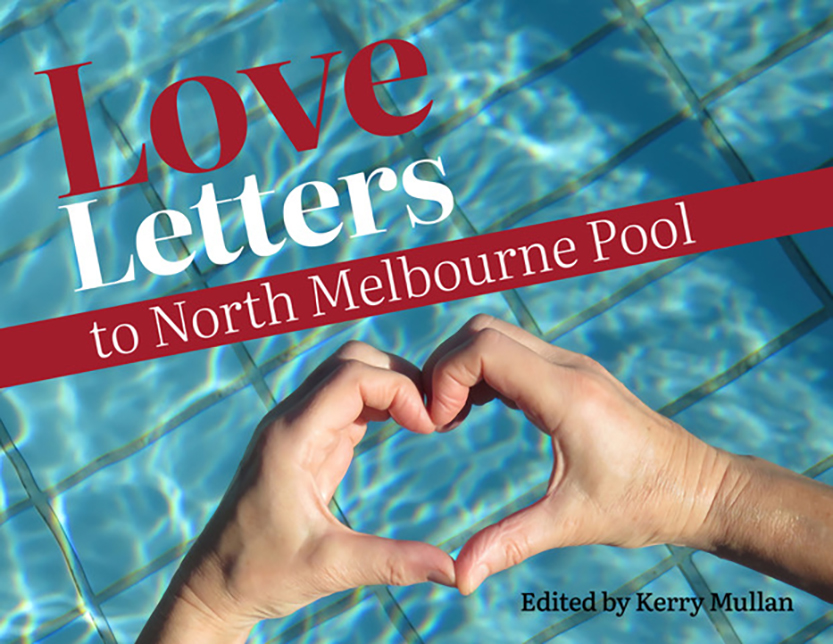
A crowd-sourced history of North Melbourne Pool launched last month is “a rich tapestry of a book” and “a great artefact of the community”, according to its local not-for-profit publisher.
Kerry Mullen did not know much about the history of the pool when she first had the idea of publishing a book about it.
The Kensington resident and academic had swum there for 20 years, but it was not until COVID shut the pool that she began to realise how much she had taken it for granted.
One day in the changerooms, Kerry struck up a conversation with another woman about the social history of swimming spots and two books she had read on the subject, one about McIver’s Baths in Sydney and the other about Hampstead Heath ponds in London.
From that exchange, the idea for a similar project was born.
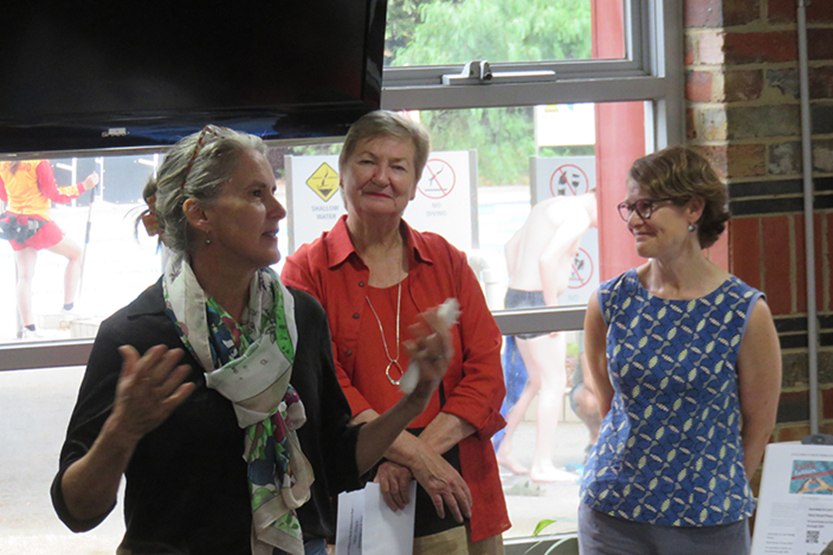
Four years later, that idea came to fruition with the launch of Love Letters to North Melbourne Pool at the Macaulay Road recreation centre on February 22.
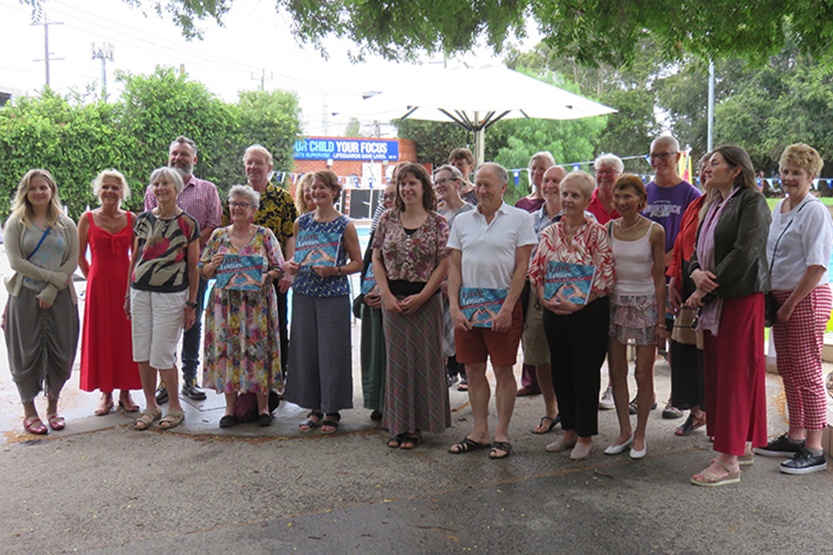
More than 100 people attended, including many of the book’s 23 contributors and activists involved in the 1990s campaign to save the pool from permanent closure.
Also celebrating was Katrine Green, Kerry’s changeroom collaborator and co-editor for the first 18 months of the project.
Opening with an essay by Monash University planning academic Dr Liz Taylor on the importance of urban swimming sites, the collection moves from local history into personal reflections on the pool’s place in community life.
Maureen Yeates first swam there in the 1940s, when North Melbourne was a working-class suburb of large families that rarely went on holidays.
She recalls “the baths” being “a big part of our lives”.
“We always called it ‘the baths’, which came from the time when people went there not only to swim but also to bathe,” she writes. “Back in the day, many homes didn’t have bathrooms.”
“There was no shade, no sunscreen, and I remember getting terribly sunburned. The chlorine was strong, and my fair hair often turned green.”
Despite that, she says her days at the pool with friends and family remain among her fondest memories.
A key chapter by community activist Angela Williams recounts the campaign to save the pool. Angela also painted the swimming-themed watercolours featured throughout the book.
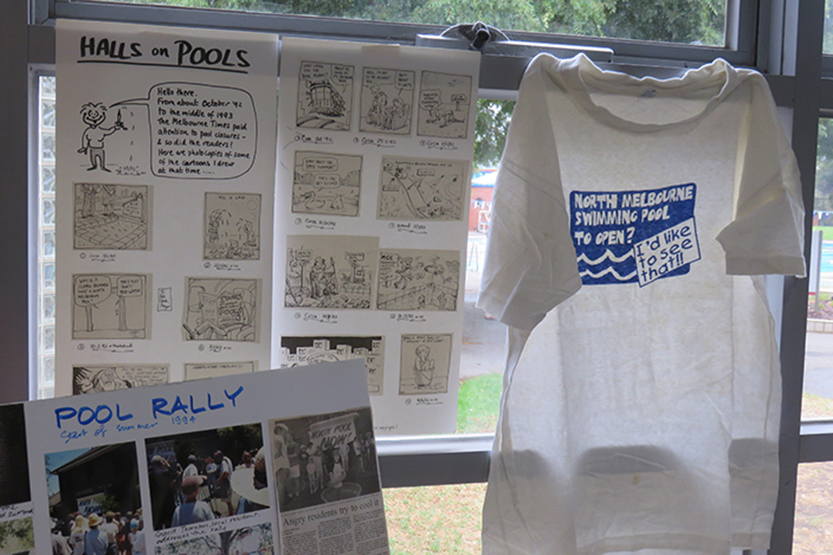
Galvanised by a 1992 report recommending the closure of the North Melbourne and Kensington pools, Angela, then a devoted swimmer and mother of two, began lobbying to save the facility.
Unlike the short and intense campaign against the closure of Fitzroy Pool, this one lasted four years, playing out through faxes, landline calls, placards, petitions, plywood cut-out art and appeals to the media.
One highlight came in December 1994, when 500 people rallied in support of the pool, joined by local celebrities Sigrid Thornton and Jane Clifton, as well as television cameras.
A rebuilt and repaired North Melbourne Pool finally reopened in February 1996.
“The book was launched pretty much 30 years to the day of the pool reopening after the campaign and rebuild,” Kerry said.
“Most of us didn’t know that history of the pool, but if it wasn’t for all those campaigners, none of us would be swimming there today and the book wouldn’t exist.”
Brendan Gleeson from Shiel Street Press attended the launch and described Love Letters as “a beautifully produced coffee table book” and “a great artefact of the community itself”.
According to Kerry, any money raised once costs are covered will go towards funding swimming lessons for those who need them. •
Related Articles

Hip hop meets gaming in world premiere at Arts House
The worlds of hip hop, gaming and contemporary performance will collide at Arts House this month with the world premiere of GG, CONJAH and PSUEDO from August 26 to 30.
Read More
Melbourne Town Hall displays Peace Prize
Melbourne Town Hall has taken temporary possession of and put on display a medal presented to the winners of Australia’s only ever Nobel Peace Prize.
Read More
Push for more murals across Melbourne’s neighbourhoods
A new City of Melbourne push could see more blank walls across the municipality transformed into large-scale murals, with councillors to consider investigating a co-funded program for private property owners.
Read More
Meet Ted – Brown Dog’s very own Brown Dog
New-look Joe Taylor brings Thai flavours to Errol St
 Download the Latest Edition